The
Axial
Method
Hold something still, and the work becomes simple.
Difficult problems get simpler when we stop trying to change everything all at once. The Axial Method is a way of working, an old, familiar, and proven approach: at every stage, choose what won't change, and what will. This works with all kinds of problems, from baking cookies to building a house. Savvy builders have used it for millennia, and now it has new relevance for AI agents.
One axis at a time
A car could change direction any number of ways. It could bend in the middle. It could slither like a snake. But instead, we build a rigid body and allow exactly one thing to move: the angle of the front wheels. That single constraint is what makes a car easy to understand, easy to design, easy to build and easy to use.
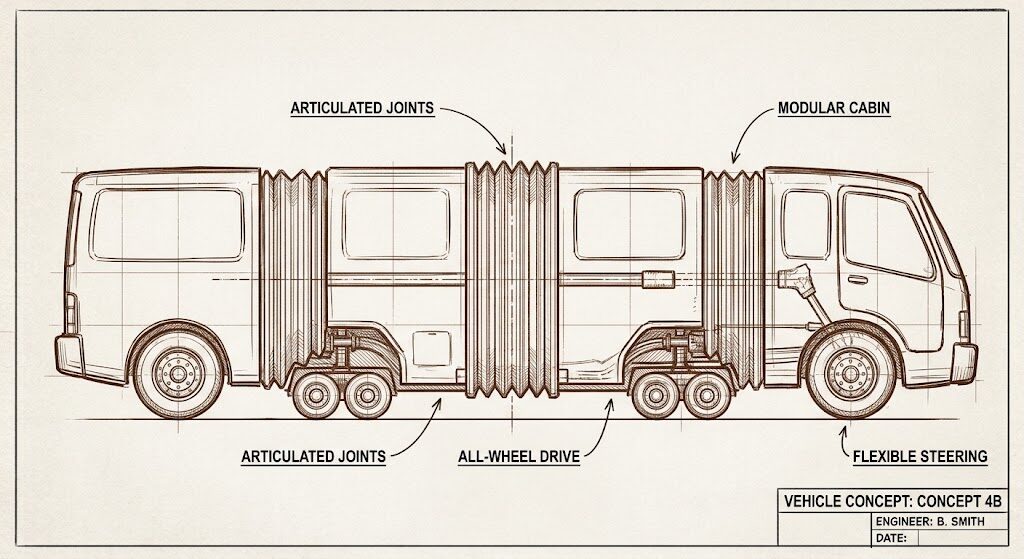
That's the essence of an axis: a mode of work defined not only by its objectives, but also by its invariants. The factors deliberately held still are the very ones that free you to work with precision along the one dimension that's open.
It may seem surprising that an axis should be defined as much by what you're refusing to do as by what you're trying to accomplish. You can sense the difference between a meaningful invariant and an arbitrary one:
A real invariant is one you'll be tempted to break.Holding it still requires discipline. If there's no temptation, it's not a real axis — just an arbitrary step in a to-do list.
You already know this pattern. You've used it your whole life. Let's look at some common examples.

The Kitchen
It's Saturday afternoon, and you've decided it's time to bake some cookies. The kitchen is a mess since last night, so you're loading the dishwasher between steps. Halfway into mixing the dry ingredients, you discover you're out of brown sugar. Now you're at the grocery store, leaving the butter softening on a cluttered counter. Back at home, the recipe says "blend the wet ingredients" but you've already cracked the eggs into the flour while the mixer runs.
None of these tasks is difficult. And yet somehow it's chaos. The failure isn't in any single technique, it's that every axis is moving at once.
Chefs solved this centuries ago; they call it mise en place. Everything in its place before mixing, before heat is applied.
- Read the whole recipe.
- Gather every ingredient.
- Measure, chop, arrange.
Then, and only then, cook.
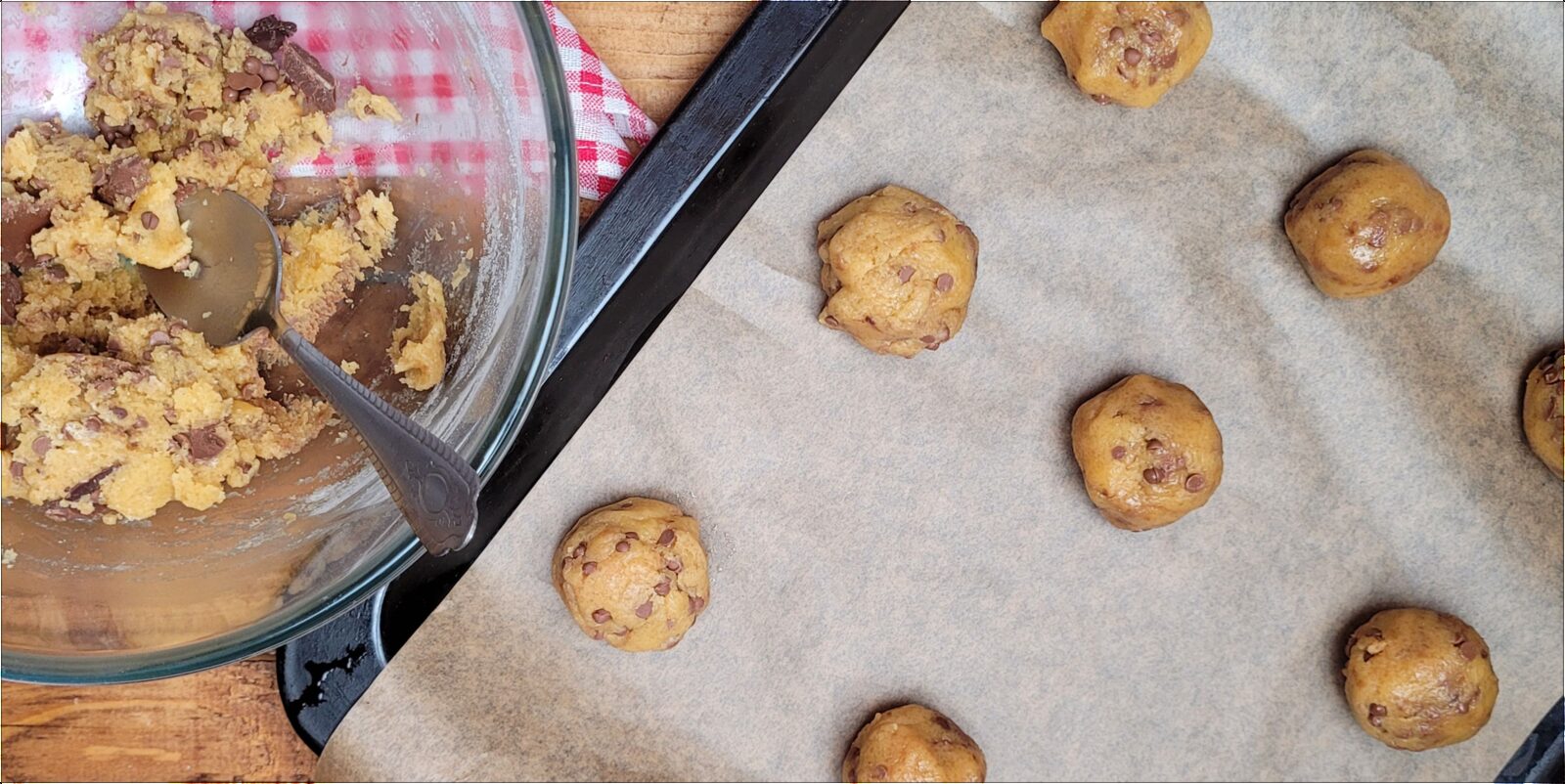
Notice the invariants? While you're prepping, the heat stays off. You don't form the cookies before mixing in the chocolate chips, and you don't mix the chocolate chips into the dry ingredients. As tempting as it may be to knock off as many tasks as quickly as possible, success depends on the discipline of respecting the invariants in each axis.
The kitchen is full of axes: prepping, cooking, plating, cleaning...and mise en place is the discipline for just one of them. How the axes fit together is its own craft. To demonstrate that, let's go to the workshop.
The Workshop
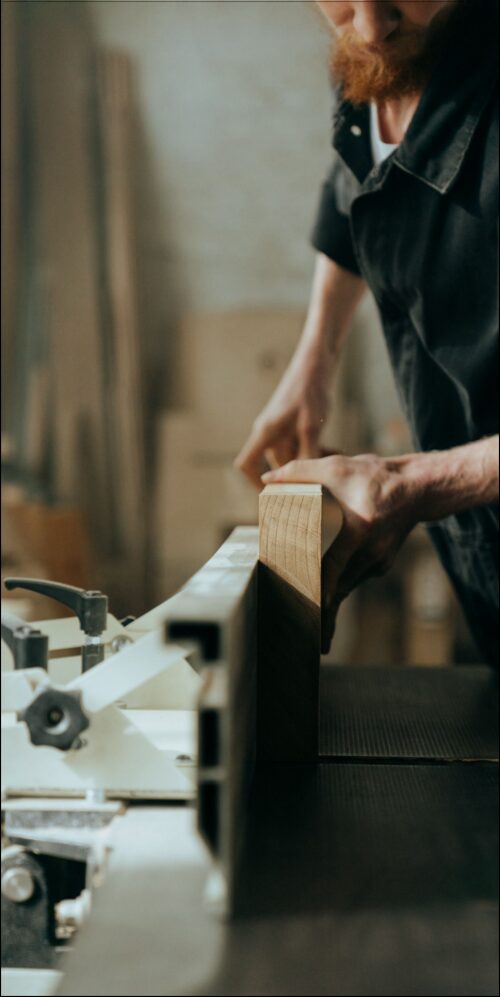
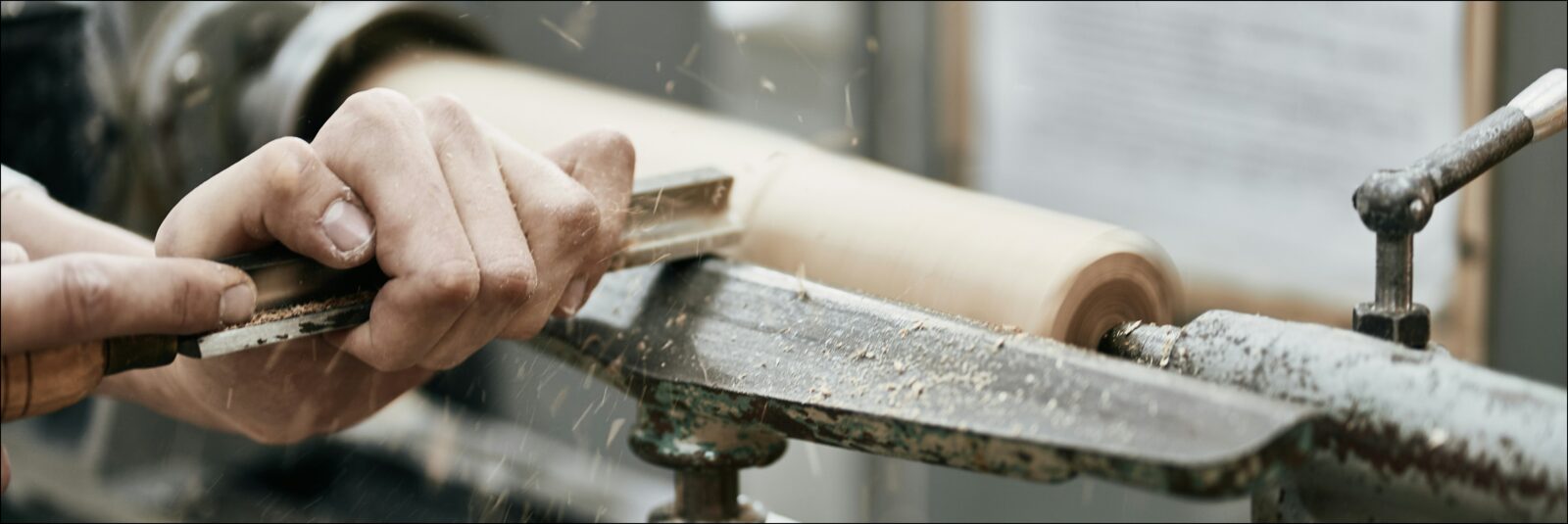
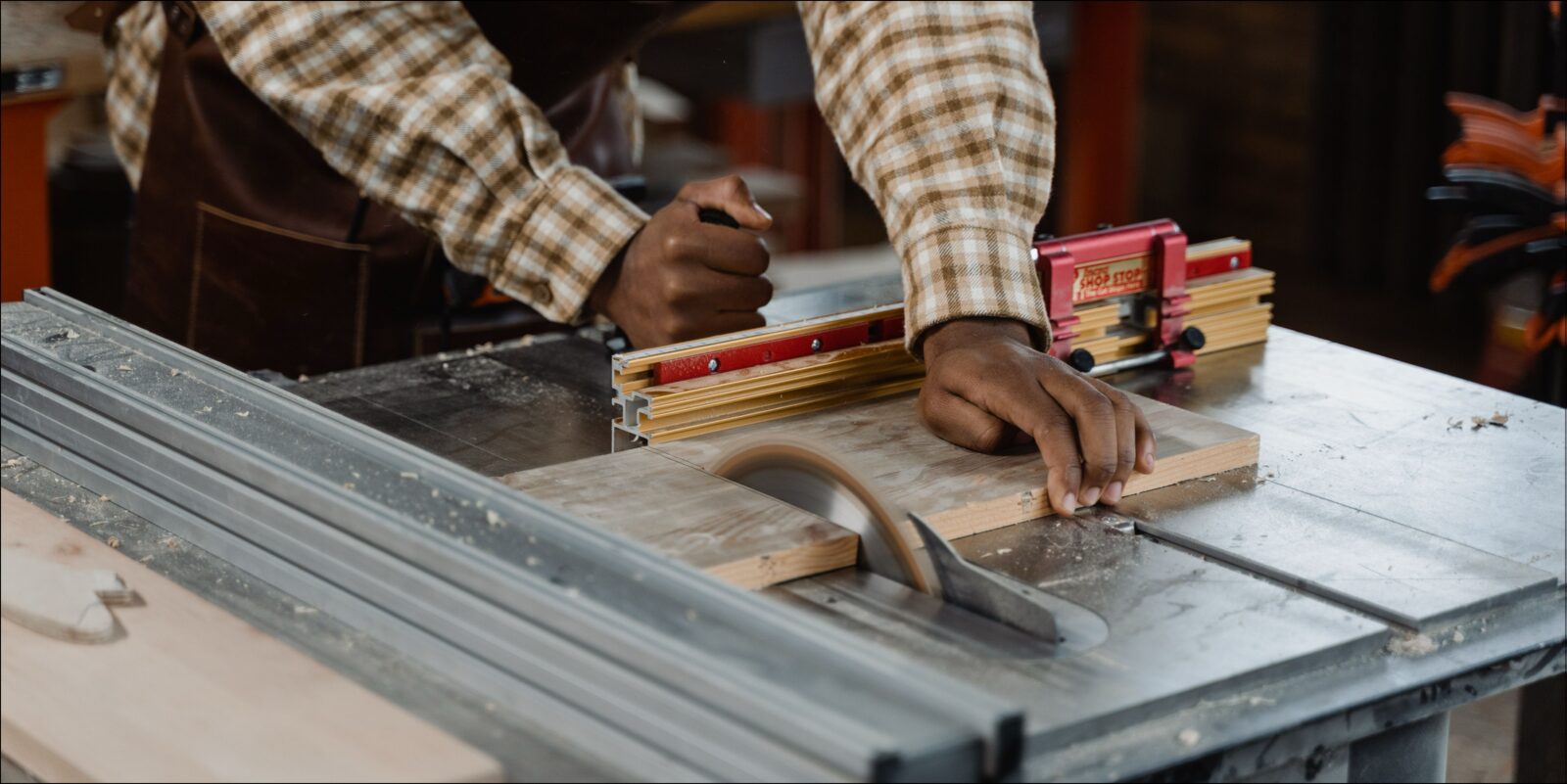
A woodworker starts with a rough, twisted board. The design calls for it to be flat, square, and true. There is no single operation that can accomplish all that at once. Instead, tradition prescribes a time-honored sequence:
Flatten one face. Just one. Ignore all other surfaces. If it wobbles, shim it so it's stable, then work until that one face is perfectly flat.
Square one edge — a clean straight cut, as square as possible. The flattened face in the previous step is now a reference surface that allows the board to lie flat so we can get a clean cut on the edge.
Bring the board to thickness — riding the flat face across the planer bed.
Rip to width — guided by the squared edge.
Note how the output of each axis became an invariant and also a reference for the next. The first flat face isn't just a completed step, it's also the fixed reference that makes the next operation possible. Engineers have notation for this: on a technical drawing, the invariant surface is marked as a datum, and every measurement is taken from that datum.
The woodworker's tools enforce the same idea physically. A clamp exists to restrict motion of something otherwise moveable. A drill press constrains drilling along a single axis. Every workshop is full of machines for holding things or dimensions of things still. We hold things still in order to do precise work.

So: axes have invariants, and axes compound: each one's output stabilizes the ground for work done in other axes. Sometimes that's a direct sequence, as with the woodworker; often it's more complex, with one result serving as a reference in several other axes at once, or a given invariant enforced in several different axes.
Let's look at one more example, to demonstrate why this matters in the era of agentic AI.
The Codebase
Software developers also use this pattern, and like the chefs, they give names to their methods. One of those is called Red, Green, Refactor, and it's the cadence of test-driven development.
Red: write a failing test. Here the code is invariant — you might be tempted to fix the code, but don't do that yet, no matter how obvious the fix!
Green: now we make the test pass. This is the fun part! Note that now the test is invariant: it might be tempting to change the test instead of the code but you shouldn't. That's the discipline of this axis.
Refactor: think the last step was fun? Now you get to improve the code's structure, design and coherence! In this axis we keep the tests as invariant once again: they are the datum surface proving the code still functions as it should.
This example reveals Axial Methodology's final property: invariants make work verifiable. "Did the refactoring break anything?" That question is unanswerable in a kitchen-chaos workflow where code and tests churn together. By holding the tests still, we can definitively answer the question. The invariant you refuse to mutate is the datum that lets you verify the part you did change.

Why this matters now
Today we are handing off real work to AI agents. The biggest problem with this isn't capability — it's legibility. An agent muddling every axis at once produces the same kitchen-chaos we saw while baking cookies: motion everywhere, and no way for an observer to reason about it. The human overseeing the work is left asking the worst kind of questions: What's going on right now? What process is it even following?
But give your agents axes, and everything improves:
- Each axis has declared invariants, so the agent doing refactoring does not touch tests. The debugging agent does not commit their experimental edits. These aren't just vibes; they're constraints you can enforce.
- The work becomes observable. The human no longer has to ask what is this agent doing? They can see which axis is active, and ask more targeted questions instead: Is this a meaningful test? Do I agree with this debugging approach?
- The work becomes verifiable. A narrow axis has narrow acceptable outputs. When checking an agent's work, we move from open-ended audits to bounded questions: were the invariants respected, and did it produce the required artifacts?
- Axes compound. Artifacts from planning become invariants in the coding axis, and a reference for testing and review besides. The structure itself — which axes, in what arrangement, with what handoffs and invariants — these become the process, easily visible and discoverable.
This isn't a new style of work devised just for agents. It's the oldest discipline in skilled work: the cook's mise en place, the woodworker's clamp, the engineer's datum face and the developer's untouched test, now re-expressed in a form that can be used to direct an agent.
Hold part of a system still so you can work with the rest of it.
Put it to work
There's a working example you can try today. The repo is a Claude Code plugin that expresses the classic red-green-refactor sequence as a set of axis skills: red, green, refactor, and pull-request, each with its contract of invariants and handoffs, plus a method skill that defines the scheme they all follow. In Claude Code:
/plugin marketplace add joelhelbling/axial-method
/plugin install axial@axial-method
Think of it as a reference set rather than the one true sequence. The real invitation is in the method skill itself, which describes how to define an axis: what it requires, what it holds still, what it produces. Your team's axes will likely look different from mine, and that's the idea. Build the sequence that fits the way you work.
If you're thinking about how your organization adopts agentic development without losing the ability to understand the work — I'd love to talk! This is what we do at Test Double, the awesome company where I work.
About the author

Joel Helbling has been building software for over 30 years; from Pascal and Perl, to Java, Ruby & JavaScript. Today he works as an Engagement Partner at Test Double, where he helps teams solve today's technology problems without losing control of the future.